- Dette innlegget er også tilgjengelig på norsk.
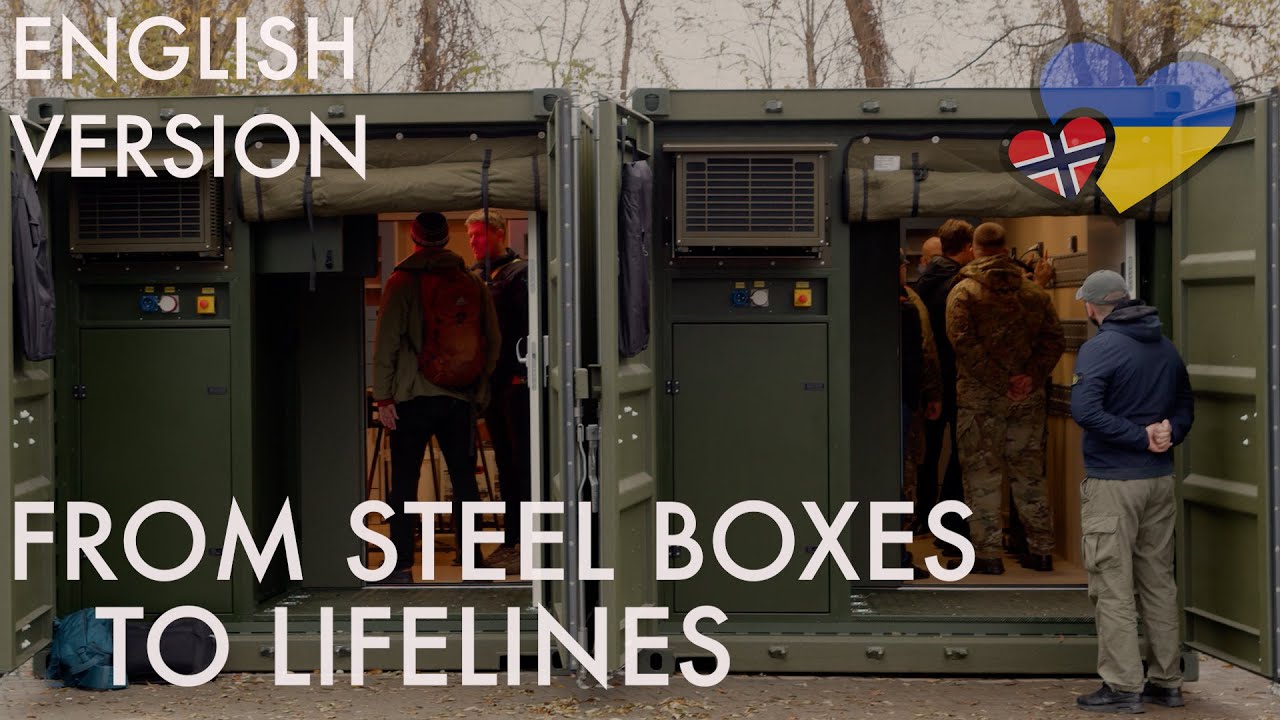
Fritt Ukraina has delivered two fully equipped medical containers to Ukrainian forces. The units are designed to provide rapid and secure surgical treatment extremely close to the front line, where both military units and traditional field hospitals are exposed to continuous artillery and precision strikes. The delivery strengthens emergency medical capacity where the need is greatest.
Podtown is the company that developed the medical containers together with Fritt Ukraina, and Ferno Norden Military. As the initiator of the project and responsible for the technical solution, Podtown plays a central role in advancing frontline medical capabilities.
Eirik Kalve, founder of Podtown, describes the need as follows:
“The goal was to create a solution that can actually withstand modern high-intensity warfare and be used close to the front. The frontline in Ukraine lacks functioning medical capacity. That is why we wanted to develop something that saves lives where traditional solutions are no longer viable in today’s brutal warfare.”
Mobile treatment near the front line
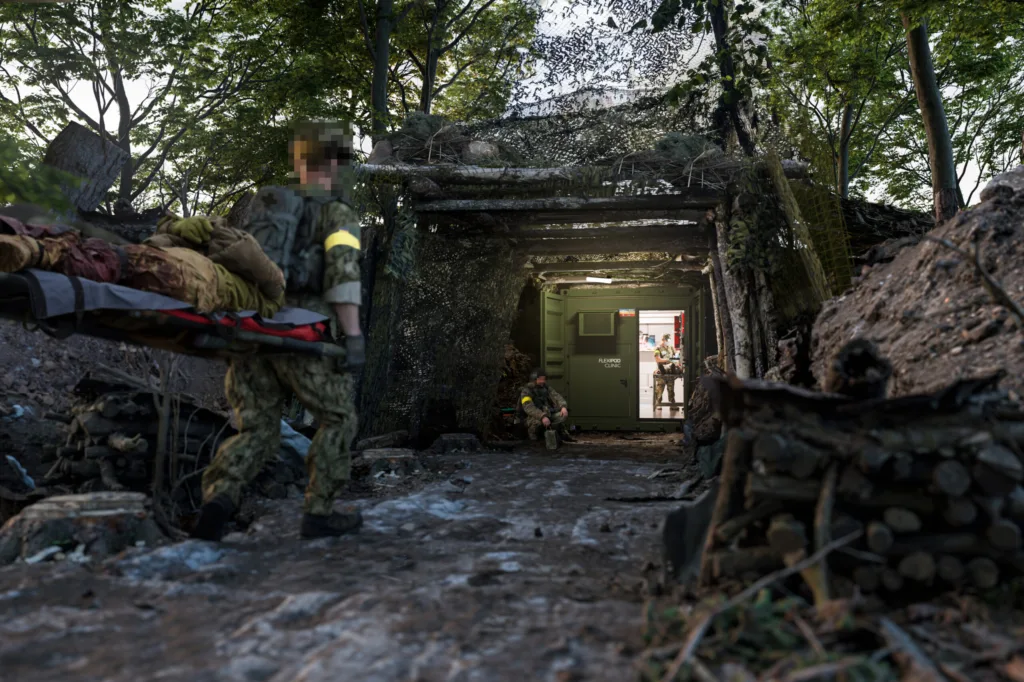
The medical containers function as mobile emergency units that can be placed close to the front line. They are built to withstand artillery, fragmentation, blast waves, and extreme temperatures, providing a stable and secure treatment environment independent of infrastructure.
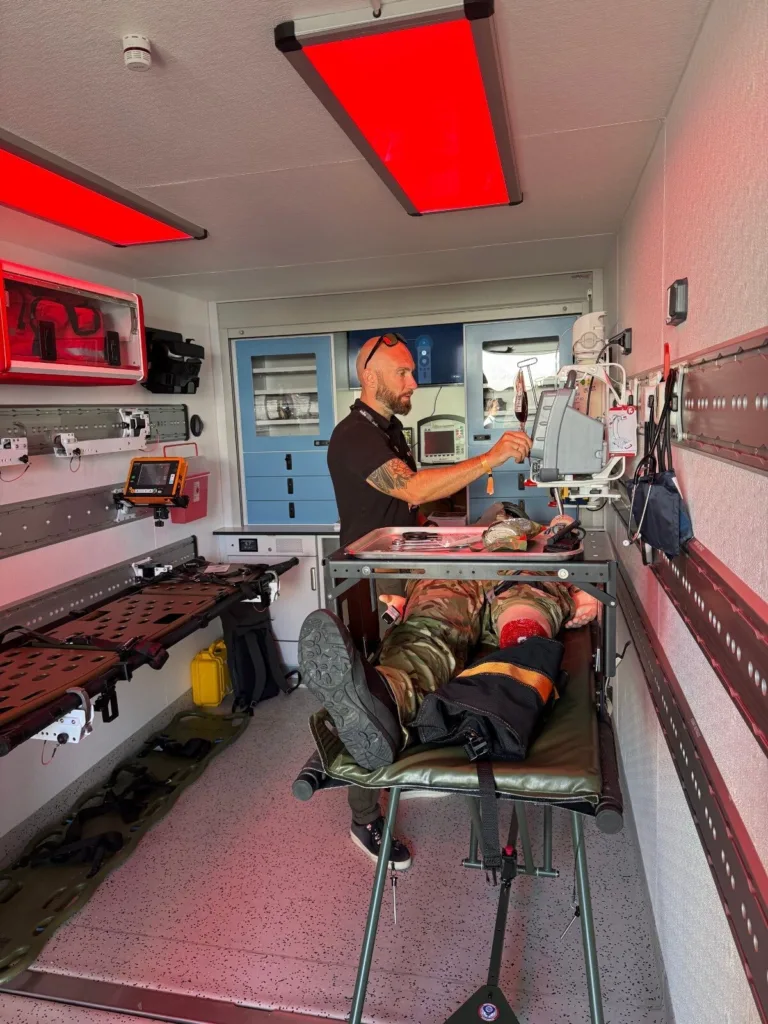
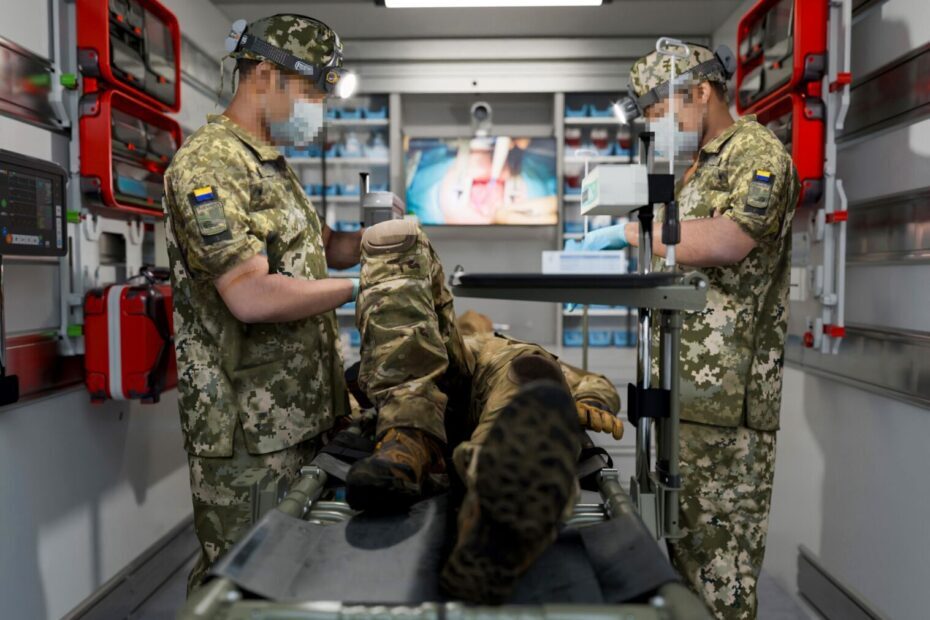
Inside, the units are set up for both surgery and acute stabilization, with an operating table, monitoring equipment, powerful lighting, oxygen solutions, advanced ventilation and filtration, and power supply for all critical medical equipment.
The containers can operate off-grid for several days and feature both green and red lighting modes for low visibility and preservation of night vision.
Kalve emphasizes the importance of rapid maneuvering:
“It must be quick to move in, and even quicker to withdraw if the situation changes. The clinical modules can be sealed and evacuated by truck at very short notice.”
The containers dramatically reduce the time from injury to treatment, often the difference between life and death on the frontline.
Flexible, robust, and rapidly deployable
The Flexipod units are standardized ISO containers with low visual signature, high mobility, and extensive ballistic protection. They can be transported by ship, vehicle, or transport aircraft, put into operation within minutes, and adapted to different locations.
The walls and structural elements consist of protective materials verified through independent military full-scale tests. These tests include scenarios where blast waves and fragmentation subject the structure to extreme stress.
“This supports our core principle that life and health must always be the highest priority, because human lives cannot be replaced,” says Kalve.
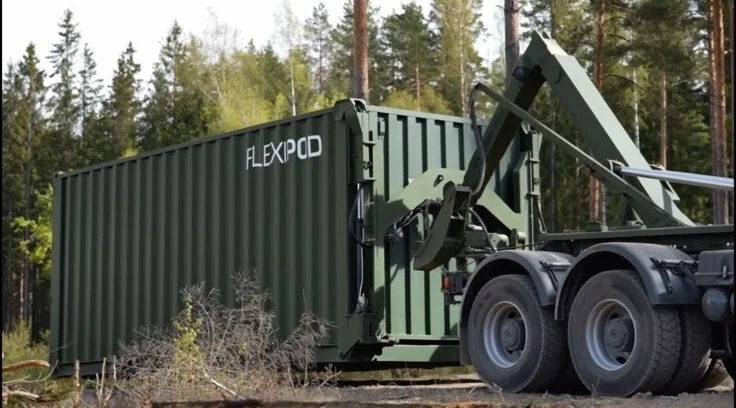
IIn fire tests, the material withstood temperatures of 1000°C for 45 minutes without penetration. The units are also approved for maritime, corrosion-prone environments and have a documented lifespan of up to 30 years.
Integrated energy systems, generator or battery pack, climate control, and air filtration enable the containers to operate autonomously for extended periods.
According to Kalve, this provides a completely new level of operational flexibility:
“It is the same core module we use for medical units, mobile command-and-control rooms, and accommodation. The point is to give the forces a robust, scalable system they can rely on.”
Critical capability for Ukrainian medical teams
The two medical units make it possible for Ukrainian medics to perform lifesaving procedures significantly closer to the front than before. This increases survival rates for severe injuries and substantially strengthens readiness.
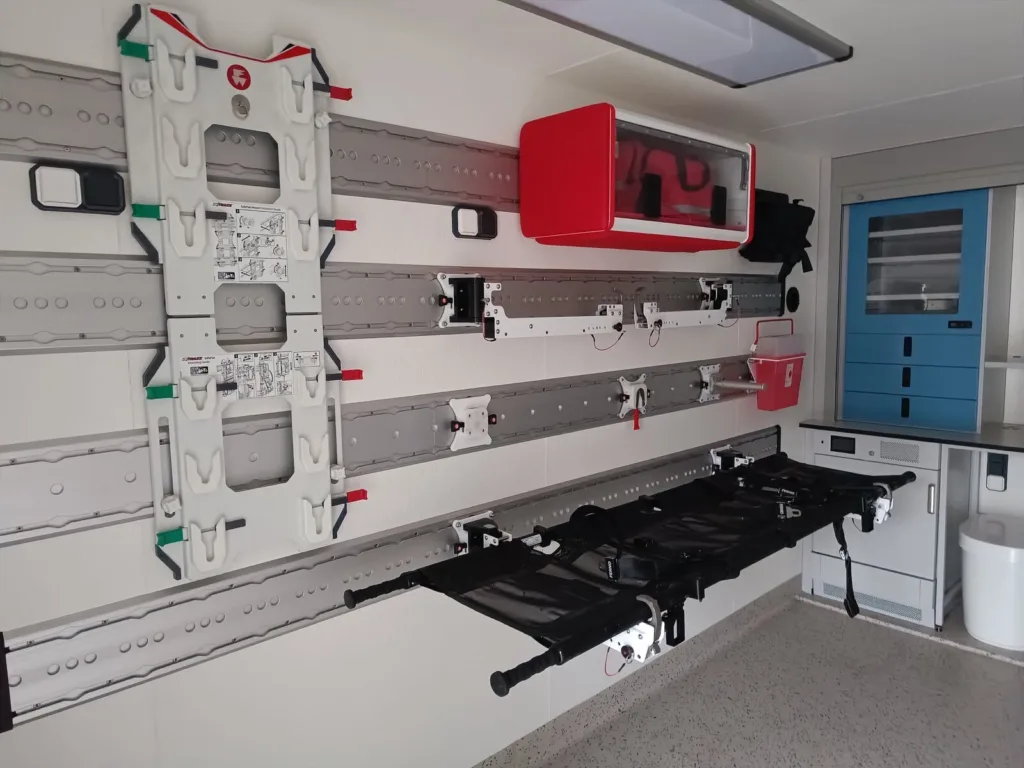
“The idea behind the interior design is that it is modular and easy to adapt to different uses,” Frank Rebnord at Ferno Norden explains.
The container can be configured as a pure surgical setup for a single patient or as a clinic treating several.
“With the Intraxx mounting system on the walls, you do not need to remove or reattach equipment. It can remain mounted at all times. The system is originally intended for ambulances. It can withstand 12 G and is built to handle rough transport,” he adds.
The units form a critical link in the evacuation chain between first aid at the point of injury and surgical treatment further back. This includes Tactical Combat Casualty Care (TCCC) — the standard for lifesaving treatment in combat.
TCCC is an internationally recognized methodology for battlefield emergency medicine, focusing on hemorrhage control, airway management, shock treatment, and rapid evacuation under fire and in unstable environments.
The new containers make it possible to move patients directly from TCCC stabilization into a protected environment for surgical procedures, without unnecessary delays.
The container can be used for both Damage Control Resuscitation and Damage Control Surgery, depending on the needs of each unit. Damage Control Resuscitation involves the rapid stabilization of severely injured patients by limiting bleeding and maintaining circulation, while Damage Control Surgery is a surgical approach focused on performing only the minimum necessary interventions to stop life-threatening bleeding and contamination before further treatment. According to the medical team, one of the units will use the container for both purposes. The container itself is simply a tool that enables the medical team to perform the procedures they have the competence and capacity to carry out – including open surgery.
The units can be buried in static frontlines for maximum protection or used as mobile assets when forces need to move quickly. They dramatically reduce transport times and increase the likelihood that critically wounded soldiers survive.
Project background
The initiative for the delivery was taken by Podtown, Ferno Norden Military, and Banair after it became clear that existing solutions could not withstand the current threat environment.
“Our ambition was to develop a capability that is both protected and sufficiently operational to stand close to the front and save lives. Delivering the first operational units is a milestone for us,” says Kalve.
Flexipod Clinic was developed in close cooperation with experienced Ukrainian medics, Ferno Norden Military, and Fritt Ukraina, based on real needs from frontline units.
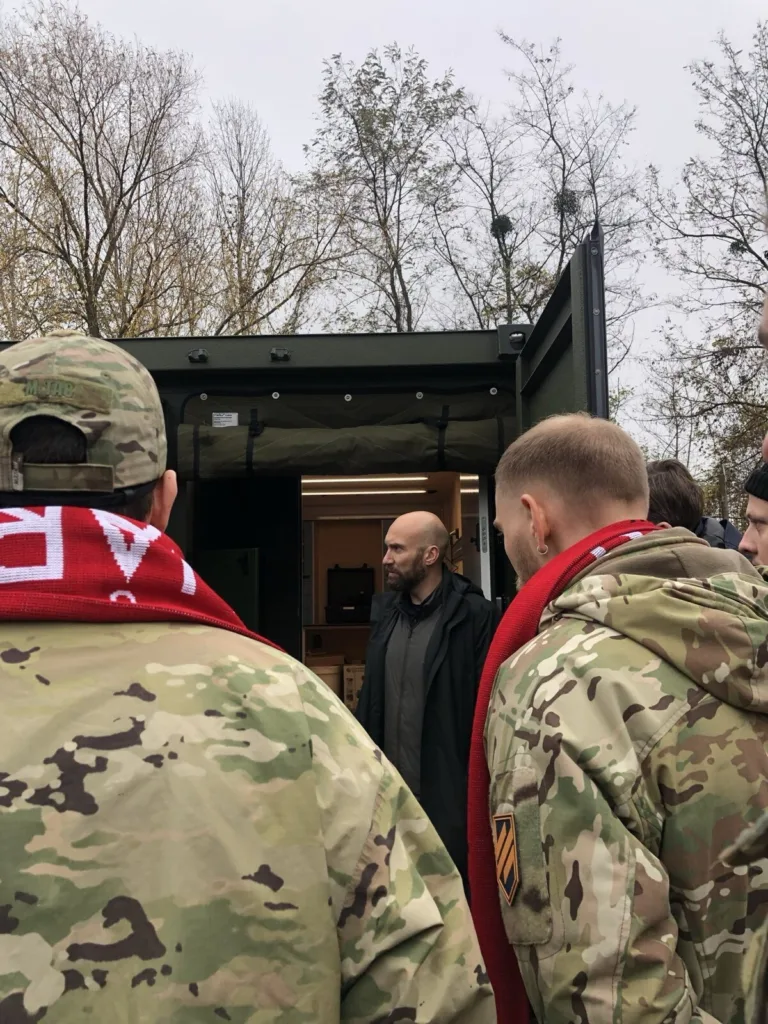
One container was funded by the football-supporters “Brann for Ukraina”, the other by the Leif and Lucy Høegh Foundation. Both were ordered directly by the Ukrainian Armed Forces and delivered as part of Fritt Ukraina’s hundredth delivery.
Watch video from the delivery